

Start with the application
A sensor that works on a clean test bench may behave differently beside a vibrating conveyor, near washdown, or when the target changes colour or position. Before comparing models, describe the job in measurable terms: target material and size, minimum and maximum distance, response time, available mounting space, background objects and likely contamination.
Also record the electrical interface. Supply voltage, PNP or NPN output, normally open or normally closed logic, connector type and cable arrangement must match the control system. These details are easy to overlook and are common reasons a physically suitable sensor cannot be used without redesign.
Mechtric carries sensing products from ELCO, including inductive, capacitive, ultrasonic and photoelectric ranges.

Industrial sensor technology comparison
Use the sensing principle as the first filter, then confirm the exact model against the installed conditions.
| Technology | Strongest fit | Watch for |
|---|---|---|
| Inductive | Metal targets at short range | Target metal, size and approach direction |
| Capacitive | Plastics, powders, liquids and level duties | Moisture, buildup and sensitivity adjustment |
| Ultrasonic | Distance or level where colour varies | Blind zone, target angle, airflow and temperature |
| Photoelectric | Longer-range and fast object detection | Optical arrangement, reflectivity and contamination |
Inductive and capacitive sensing
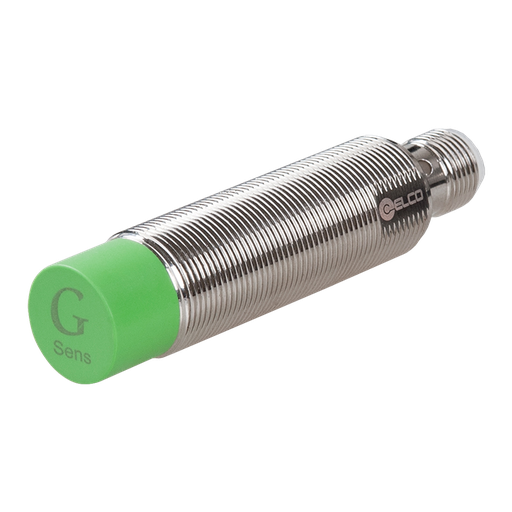
Inductive proximity sensors are a dependable first choice for detecting metal targets at short range. They do not rely on a light beam and are widely used for end-position confirmation, gear or cam detection and component presence on machinery. The target's metal type, size and approach direction affect the usable distance, so the catalogue rating should not be treated as a guaranteed installed range.
Capacitive sensors respond to changes in an electric field and can detect conductive and non-conductive materials. That makes them useful for products such as plastics, powders and liquids, including some level-detection duties through a non-metal vessel wall. Material properties, moisture, buildup and the surrounding structure can all influence sensitivity. Commissioning should therefore include adjustment and testing with the actual product.
Ultrasonic and photoelectric sensing
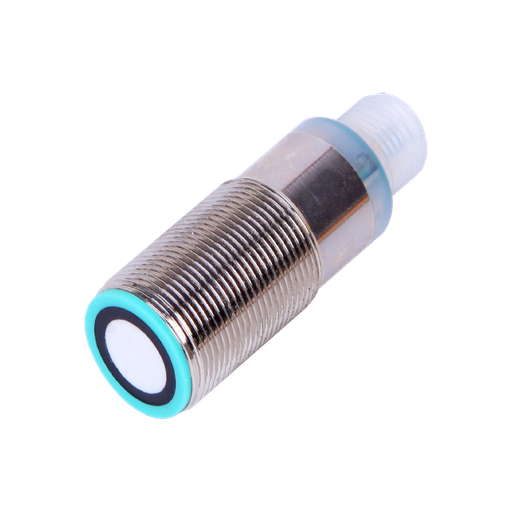
Ultrasonic sensors measure using sound rather than colour or visible contrast. They can suit distance or level measurements and targets that are transparent or visually inconsistent. Soft, angled or sound-absorbing surfaces can weaken the return signal, while temperature, airflow and nearby geometry may affect the result. Check the sensor's blind zone as well as its maximum range.
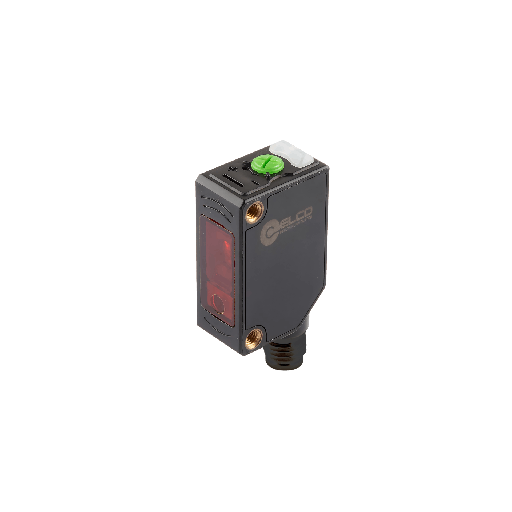
Photoelectric sensors use light and are available in through-beam, retro-reflective and diffuse arrangements. They are often chosen for longer distances, fast-moving packaging and small-object detection. Each optical arrangement has trade-offs: through-beam systems are robust but need a transmitter and receiver; retro-reflective sensors need a reflector; diffuse sensors depend more heavily on the target and background. The OS10-ECP6Q8 example below is the receiver only and must be paired with the separately listed OS10-S6Q8 emitter. Transparent or highly reflective objects may require a specialised optical mode.
A repeatable selection process
Shortlist the sensing principle first, then compare mechanical and electrical details. Confirm the rated enclosure protection, temperature range, vibration tolerance and materials against the installation. Allow enough adjustment for real-world tolerances and provide a mounting arrangement that will not drift when machinery is serviced.
Finally, test the complete range of expected targets—not only the easiest sample. Verify both detection and non-detection states, including a dirty lens, low product level or off-centre target where relevant. Document the final setting so maintenance teams can restore it without guesswork.
Products referenced
Examples to compare
These are starting points for comparison. Confirm the exact model against the current manufacturer documentation and your application.
Application support
Need help narrowing the field?
Contact Mechtric with the target, sensing distance, environment and control input details. A short application description is usually enough to identify the right sensing principle and a practical shortlist.