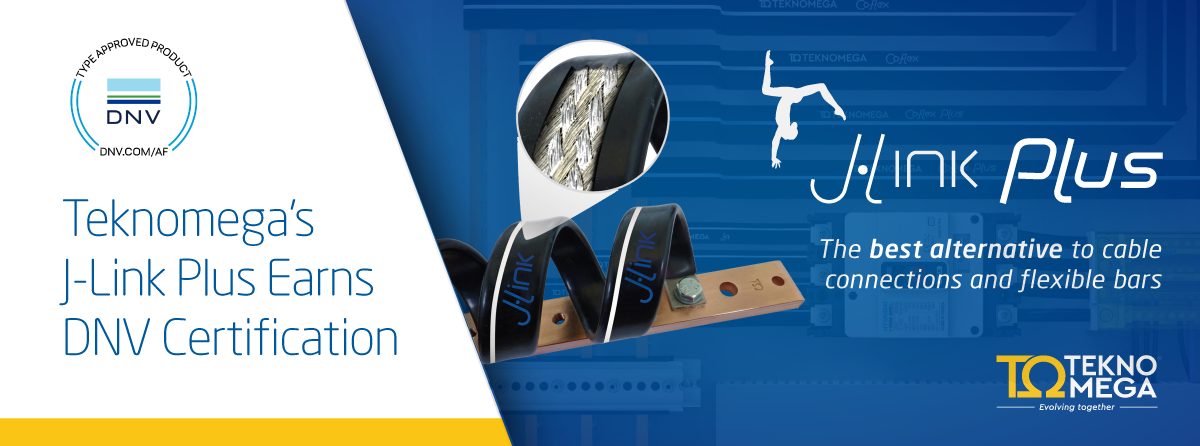
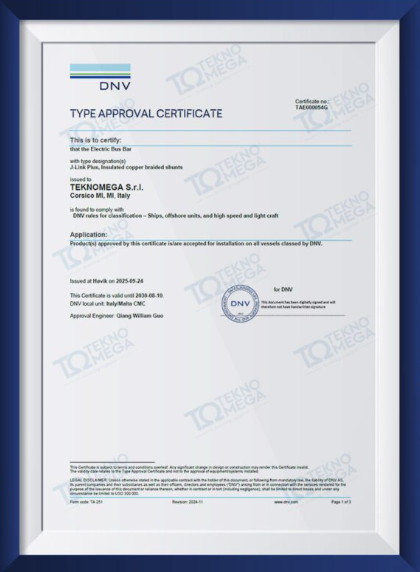
We’re proud to share some exciting news from one of our trusted partners: Teknomega’s J-Link Plus flexible braids have officially received DNV certification.
This recognition confirms that the product meets the highest international standards required in the maritime sector.
As a distributor and long-standing supporter of Teknomega’s innovation, we’re thrilled to see their engineering excellence acknowledged at this level.
What Is J-Link Plus?
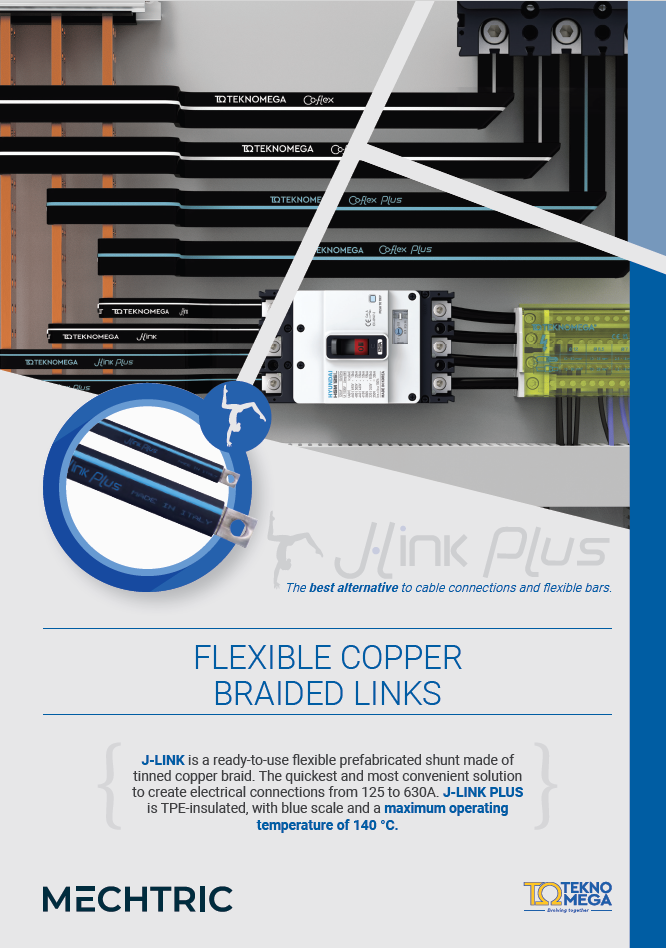
J-Link Plus is Teknomega’s next-generation flexible copper braid, designed for demanding electrical installations where flexibility, durability, and performance are essential.
Built from tinned electrolytic copper sheets and insulated with a high-performance technopolymer, it offers:
-
Exceptional flexibility
-
Fast, risk-free installation
-
A compact, professional appearance
-
Superior thermal and electrical performance
What Is DNV Certification and Why Does It Matter?DNV (Det Norske Veritas), also known as The Norwegian Truth, is a globally respected organisation specialising in the safety, quality, and sustainability of marine and industrial systems. For any component used in marine environments, DNV approval reassures customers that the product:
This certification provides confidence, credibility, and peace of mind — especially for shipbuilders, panel builders, and marine electrical integrators. |
|
J-Link Plus: Faster. Safer. Better
Here’s how J-Link Plus delivers a safer, faster, and more efficient connection.
-
Faster, cleaner installation: Ready-to-install factory-pressed terminals eliminate measuring, cutting, stripping, buying lugs, and on-site crimping, reducing installation time and errors.
-
Superior electrical & thermal performance: Delivers higher ampacity, a 140 °C insulation rating, and halogen-free, smoke-retardant protection.
-
Certified safety & compliance: UL and DNV certification ensure lower heat generation, safer connections, and full international compliance.
-
Space & weight optimisation: Flexible, compact design reduces cross-section by up to 30%, enabling smaller bend radii and cleaner panel layouts.
-
Reliable, consistent performance: Factory-pressed terminals guarantee low resistance, consistent quality, and reduced failure risk regardless of installer skill.
Want to learn more?
For full technical specifications, sizing options, and installation details, see the J-Link Plus brochure for comprehensive information.
 |
Explore the full range here Need assistance? Contact Mechtric on 1800 252 995 or email sales@mechtric.com.au |
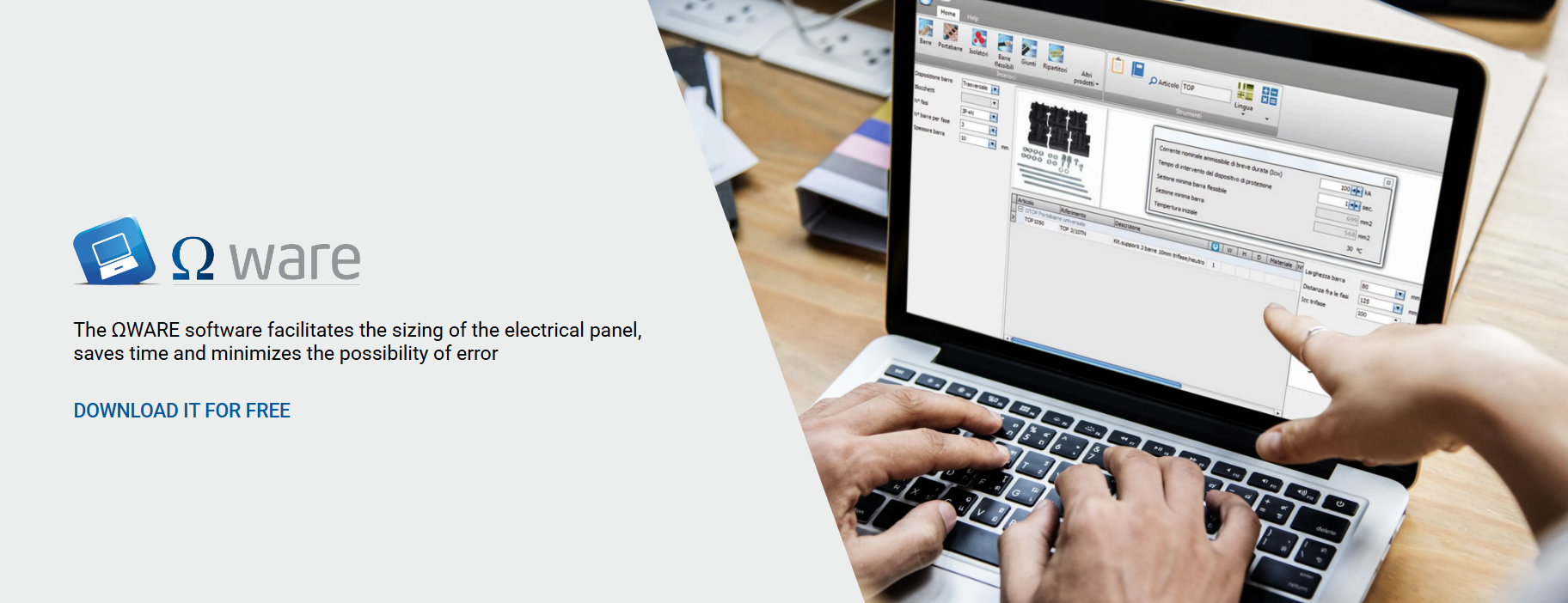
Smarter Panel Design with Teknomega's ΩWARE Software
Alongside the J-Link Plus range, Teknomega also offers ΩWARE, an intelligent software tool designed to streamline the sizing of electrical panels. ΩWARE helps engineers and panel builders:
-
Reduce calculation time
-
Select the correct components with confidence
-
Minimise sizing errors
-
Improve overall design efficiency
It’s a practical companion for anyone looking to optimise performance, ensure compliance, and speed up engineering workflows.
Download ΩWARE Software using the following link: https://teknomega.com/panel-division/#omegaware