

What a soft starter does
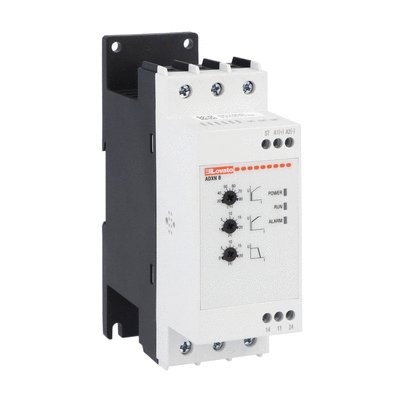
A soft starter controls the applied voltage during acceleration, reducing the abrupt electrical and mechanical effects of direct-on-line starting. Once the motor reaches operating speed, many designs use an internal or external bypass so the motor runs directly from the supply. This is a good fit when a machine needs a controlled start but then operates at a fixed speed.
Typical candidates include some fixed-speed pumps, fans, conveyors and machinery with a difficult start. The device must still be rated for the motor current, start duration and number of starts per hour. A load with high breakaway torque or repeated starts can require a different rating from an easy-starting centrifugal load.
Mechtric carries Lovato Electric soft starters alongside Delta standard AC drives.
VFD and soft-starter comparison
The decisive difference is what the process needs after the motor has started.
| Requirement | Variable frequency drive | Soft starter |
|---|---|---|
| Continuous speed control | Yes | No—fixed speed after startup |
| Controlled acceleration and deceleration | Yes | Yes, within device and load limits |
| Typical fit | Variable demand or multiple operating speeds | Fixed-speed duty needing gentler starting |
| Design focus | EMC, harmonics, cable, cooling and braking | Start current, duration, bypass and starts per hour |
What a variable frequency drive adds
A VFD controls frequency as well as voltage, so the motor can operate above or below its base speed within the limits of the motor and driven equipment. It can ramp acceleration and deceleration, respond to a process reference and maintain different speeds for different operating stages.
That makes a VFD useful where demand varies: pressure-controlled pumps, adjustable conveyors, process fans, mixers and machines with recipe-based speeds. It can also provide detailed diagnostics and communications. These capabilities require more parameterisation and greater attention to EMC, motor cable length, harmonics, cooling and safe stopping.
A straightforward decision test
Ask what should happen after the motor reaches speed. If it should remain at one fixed operating speed and the main concern is reducing start stress, a soft starter may be the simpler solution. If speed must change with demand or the process needs controlled torque, feedback or several operating speeds, a VFD is usually the stronger candidate.
Energy use should be assessed in context. A VFD can reduce consumption when it replaces mechanical throttling on a variable-torque load or allows unnecessary speed to be removed. It does not automatically save energy on every constant-speed machine, and its own losses should be included in the assessment.
Installation and safety questions
Confirm the supply, motor connection and upstream protective device for either technology. For a soft starter, check start current, ramp time, bypass arrangement and starts per hour. For a VFD, also check motor insulation, low-speed cooling, braking, output filtering and electromagnetic compatibility.
Products referenced
Examples to compare
These are starting points for comparison. Confirm the exact model against the current manufacturer documentation and your application.

Application support
Compare the application with an engineer
If the choice is not clear, contact Mechtric with the motor nameplate, load, desired operating speeds, ramp time and start frequency. Those details usually make the trade-off visible.